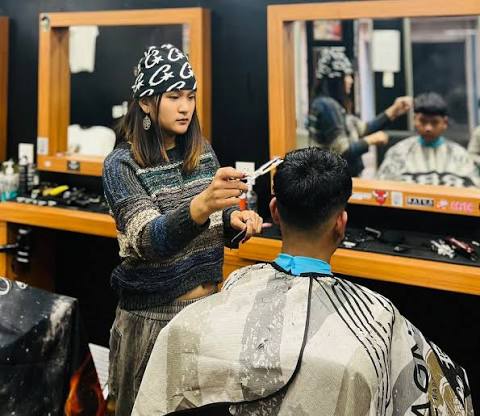
If you are considering becoming a barber, then you are on the right page. If you are considering a career in barbering in Nepal, then this is the place for you.
If you are wondering about making a career in barbering in Nepal, you will want more than just a motivational speech: you'll want some figures. So how much is it worth? Do you have a market for your career? Is it better with age or early on?
Why More People in Nepal Are Considering Barbering as a Career
The rise in interest in barbering as a career in Nepal can be attributed to several factors. Several reasons contribute to the increase in interest in barbering as a career in Nepal.
Barbering is a skill that falls somewhere between the extremes of practical and hands-on and does not require years of formal schooling, yet it yields in-demand and steady work. Each neighborhood has its own barber, and the clients will remain loyal, like many professions, to the same person for years at a time.
In Nepal, many young people are seeking short-term certifiable skills such as barbering that do not involve a time-consuming degree program or a job in the corporate world.
What is the salary of a barber in Nepal?
Currently, there is limited information available regarding the salary for barbering in particular in Nepal, but the figures available provide a useful guide. According to one of the sources of salary, Kathmandu's barber earns around NPR 415,900 per year; the range is from around NPR 215,100 to NPR 633,300. It says that the average barber with a certificate or diploma education earns about NPR 518,300 per year, a substantial increase compared to their counterparts without formal training.
In comparison, the average monthly salary for all professions in Nepal is about NPR 32,000 (USD 234). A highly trained barber with a salary on the higher end of the scale, combined with tips, walk-in business, and repeat customers, can easily surpass a national average, something that is not usually reflected in formal salary surveys.
It should be noted that salary survey data does not really cover self-employed barbers (chair renters or shop owners) very well, as most salary surveys are based on formal employment. In reality, a lot of barber shops in Nepal receive extra salary through this besides their base salary.
Barber Salary vs. Other Common Benchmarks in Nepal
For a perspective on how much money can be made from barbering, let's look at the overall wage scenario in Nepal:
|
Role / Benchmark |
Approx. Monthly Income (NPR) |
|
Nepal's national minimum wage |
19,550 |
|
Nepal's average salary (all sectors) |
32,000 |
|
Fresher / entry-level jobs (general) |
15,000 – 25,000 |
|
Barber (certified, Kathmandu, average) |
34,600 |
|
Barber (certified, Kathmandu, high-end) |
52,700 |
|
Barber (certificate/diploma holder, average) |
43,200 |
Data shown are averages converted to a monthly basis and rounded for ease of reading
A Note on the Data
Available salary-tracking sources were used to gather the salary data in this article and cross-referenced with the wage statistics in Nepal in general to set a backdrop for the data. Think about them as benchmarks and not predictors. People do make more money based on where they work, the reputation of the shop, and the type of clientele they have.
If you're looking to find a job in Kathmandu that pays the national average, you might be better off looking for a certified barber.
Job Demand and Opportunities for Trained Barbers
The demand for barbering services is not a riddle in Nepal but steady, and it is a good riddle. It is not a trendy market; it is a service that is necessary in every community, city, and town. There are typically several different avenues for opportunities:
- Works in a barbershop/salon (most typical first job)
- Freelance or chair rental jobs have higher earning potential with more clients once you have established yourself.
- Many trained barbers dreamed of opening their own shop, particularly in the growing city of Kathmandu, the long-term objective for many.
Formal qualifications (not informal, self-taught skills) can become important to employers, as a barbering trade that relies on hands-on skills demonstrates reliability, hygiene standards, and a consistent technique, which in turn is an indicator of a shop's reputation with customers.
The way career growth is realized
Barbering is a relatively typical career path:
Junior barber / trainee (Years 0–1): It is a period of time in which the individual is still developing speed and consistency, typically resulting in a lower end of the salary range, unless they are working under supervision.
Repeated meetings with customers (Years 1-3): Tips and repeat business begin to boost income from base pay, and referrals begin to get more customers.
Senior barber / chair owner (Year 3+): If the owner of the barber shop is a senior, he/she may be able to charge premium prices at a stable shop or own a chair where income is no longer a fixed salary but is based on what the chair earns.
Shop owner: If you are looking for a bigger opportunity, a shop will no longer have to be limited to one pair of hands; it will be making money with several barbers and an increasing number of customers.
It's a reason that appeals to those who want long-term potential as opposed to simply a paycheck; there’s no salary cap here like there is in many office jobs.
What skills and training are required to get started?
The best barber training program will include more than just hair cutting. As a minimum, seek out training in:
- Using clipper work, fading, and the scissors-over-comb technique.
- Straight razor shave & hot towel service.
- Shaping beards and basic coloring of hair.
- Good hygiene and sterilization of tools
Know how to communicate with clients and have basic business skills such as pricing, scheduling, and upselling.
When a program integrates business education with technical training, graduates will be prepared to go right into work or to begin their own shop later.
Is Barber Training Worth the Investment?
Considering the fact that certified barbers would seem to be able to make a bit more money than the national average and a whole lot more than the guys who don't have formal training, it really doesn't take long for a quick training course that is a bit inexpensive to pay for. Barber training isn't the same as a multi-year degree program, so you'll be making money much sooner.
The larger value, however, tends to manifest over time: certification opens up better shops, better-paying customers, and eventually even the option to become self-employed, something that is much more difficult if one only has self-taught knowledge.
Frequently Asked Questions
What is the duration of a barber course in Nepal?
Most of the certificate programs for barber training are conducted for about 1 - 1.5 months of intense hands-on learning, which means you can be going from learning to earning in a couple of months.
Do you have to have experience to get started in barber training?
No. Sane programs are created for novices who have never attempted to work with a manikin and lead with basic skills, such as tool control and mannequin practice, and then move on to live models with supervision.
Is barbering a career or an entry level?
It may be either, depending upon the route you take. The higher long-term earning potential typically occurs when you start as an employee at a barber shop or chair rental arrangement and eventually become a chair owner or shop owner.
Does certification impact compensation?
The data on salaries available shows that there is a significant difference in average salary between certified or diploma barbers and those not trained, and that certification also appears to provide access to better shops and job opportunities.
What is the difference between working at a shop and being the owner of a shop?
You have a steady paycheck and less risk in working at a shop, and you develop your skills and clientele. Running a store (or renting a chair) has greater earning potential, and it has more responsibilities, such as those of managing costs, hours, and possibly other people in the job.
How to begin a career in barbering in Nepal?
If the figures above are giving you a good idea of the deal, the next step is to find a training program that is appropriately certified, has an appropriately small class size to allow for hands-on learning, and provides support after completion of the program, such as job leads, references, or further guidance in opening a barber shop in the future.
Learn about Apex Skills Academy's Professional Barber Training Course