When you are responsible for so many things, you need to select the proper old age home. When you have numerous responsibilities, you need to go for the right old age home.
Choosing the best old age home options for a family member you cherish may be enough to exhaust you psychologically. Perhaps you have several responsibilities and feelings of guilt to balance at the same time. Perhaps all decisions are weighty because you're wanting to do what's right.
There are others that are in a similar situation to you. While it may seem like giving up, it's more about providing the safest, most supportive setting for your loved one and yourself as you choose an old age home.
Why is it that it's so hard to choose an old age home?
Caregiver responsibilities for older adults can evoke feelings of grief, uncertainty, caregiver stress, and even family conflict. Many caregivers are silent and ask themselves questions such as:
“Isn't it enough? “Is it enough?”
“Will they be left behind?”
So what if I go to the wrong location?
“How can we be sure that they will be treated with dignity?”
Such emotions are very prevalent amongst family carers. People's focus on self-care for caregivers tends to be on caring for their physical, emotional, and other needs without realizing that taking care of their decisions can be taxing as well.
The reality is that when you care about someone, it is difficult to find the appropriate care and at the same time deal with the "caring" guilt.
But, what does “the right old age home” mean?
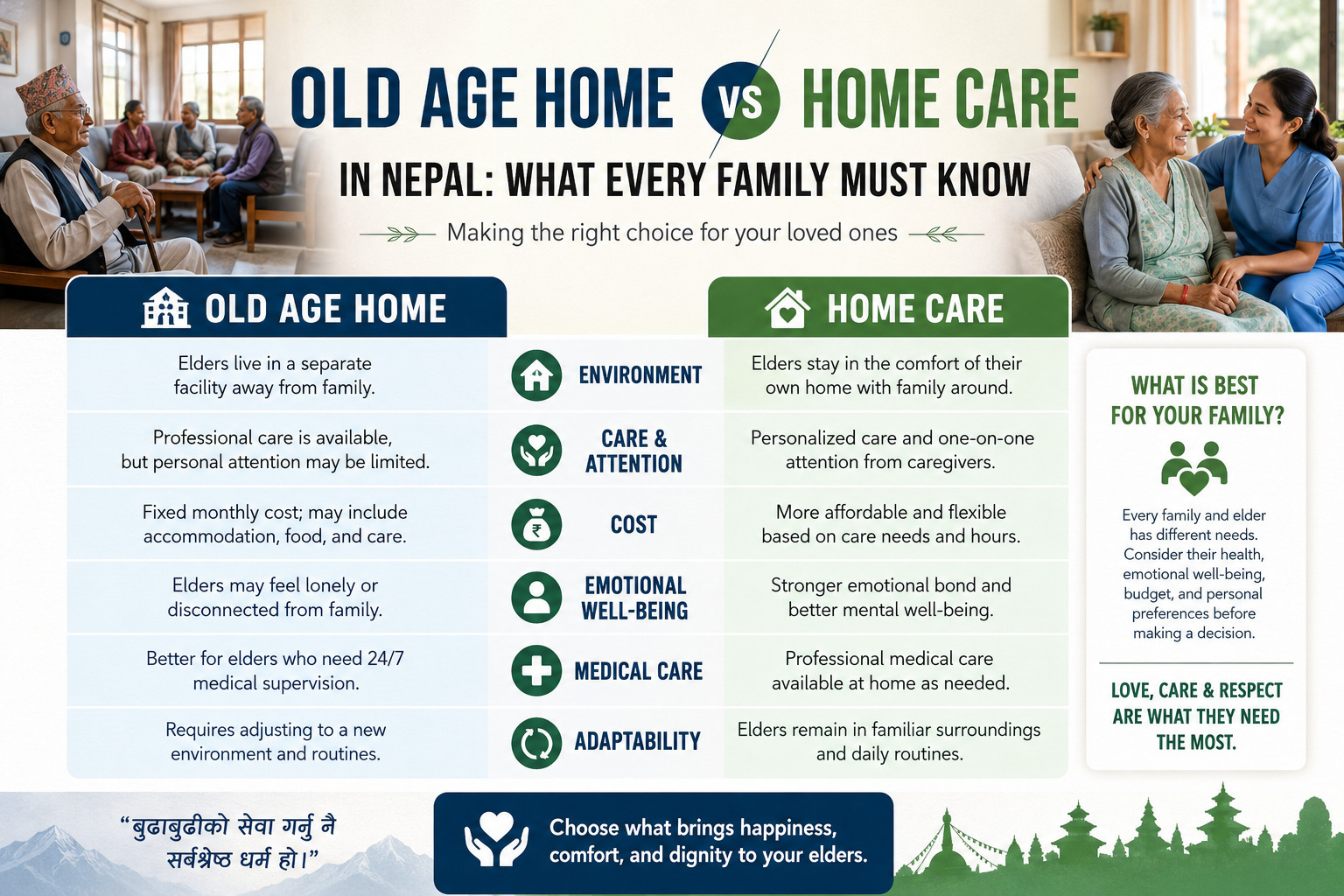
The right old age home is a care home that cares for your loved one's physical safety, emotional well-being, medical needs, dignity, and quality of life—and it provides sustainable care for the family caregiver, too.
The "best" facility may not be the most expensive or fancy facility. The decision of which to use is dependent on:
- Health needs
- Emotional comfort
- Budget
- Staff quality
- Cleanliness and safety
- Social environment
- Communication with families
It is important to have an idea of this, and it can relieve some stress. You're not looking for perfection; you're looking for safe and caring care.
Before choosing a place for your loved ones to live their golden years, you have to ask yourself these 10 questions.
1) What is the normal state of the staff's treatment of residents?
On visits, be mindful of the ways in which everyday interactions take place:
- Are there respectful words used by caregivers?
- Are residents treated as if they do not exist, or do they exist?
- Is the setting hectic or relaxed?
- Is there personalized communication from residents?
- Little things can say a lot more than brochures.
2. Is the facility clean, safe, and comfortable?
Look closely at:
- Bathroom cleanliness
- At the time of the children's activity, smells are observed in rooms or hallways
- Installing Safety rails and Accessibility
- Emergency response systems
- Lighting and ventilation
It's emotionally important as well to have a warm environment. Medical efficiency does not guarantee a welcoming and comfortable environment.
3. What type of healthcare is there?
Make yes/no questions, e.g.,
- Do you have a nurse on staff 24 hours a day?
- What do you do in the event of an emergency?
- Is a doctor available on a regular basis?
- What are the procedures for taking medications?
- Are they able to provide assistance with dementia or mobility problems?
When your loved one's health changes, it's important for you to have flexibility in your care future.
4. Does the community provide support to residents emotionally and socially?
One of the greatest unseen problems faced by the elderly is loneliness.
Ask about:
- Daily activities
- Group programs
- Outdoor time
- Activities that relate to religion or culture.
- Mental health support
- Family visitation policies
You're selecting a company that will handle your healthcare. You're selecting an experience for your everyday life.
The following activities are suggested for persons who are elderly. Here are some activities to be recommended for elderly people.
5. What is the level of transparency of the costs?
There are a lot of families that are taken aback by unexpected costs down the road.
Request a breakdown of the amount in writing such as:
- Monthly fees
- Medical charges
- Emergency care costs
- Personal care add-ons
- Deposit/refund policies
Financial stress can be an extra burden on a caregiver's stress and overwhelm, so clarity is important early on.
6. What do existing residents/families have to say?
While it's great to use the internet to find reviews, real conversations count more.
If possible:
- Communicate with parents and carers who visit.
- Inquire about complaints' procedure
- Explore how responsive communication is. Discover the question of responsive communication.
- Take note of how families appear to be comfortable and trusting
Go with your gut feeling in these discussions!
7. What is the emergency/hospital transfer policy of the facility?
Systems can help to reduce the stress of an emergency.
Ask:
- Are there any hospitals close to you?
- How is communication with families made?
- Who is with the residents in case of emergency?
- Is transportation available 24/7?
Organized care typically is indicated by clear protocols.
8. Will your loved one be able to keep a decent and independent lifestyle?
This is a question that is of utmost importance.
Notice whether residents:
- Eat a variety of foods and enjoy different mealtimes
- Can personalize rooms
- Are encouraged to stay active
- Maintain privacy as much as possible.
- There is a danger in good care that it will strip away dignity.
9. What is the emotional tone of the environment?
Sometimes, families overlook emotions since they are preoccupied with logistics.
However, emotional atmosphere is important.
Ask yourself:
- Is the location a peaceful place?
- Is there a lot of interaction by residents or very little?
- If you fell, would you like to spend time there?
- Would you like your loved one to feel emotionally safe?
- It's important to trust your instincts.
10. Do you make decisions out of guilt—or out of realistic care needs?
This could be the most difficult question.
Overwhelmed caregivers often go just to the very end of their physical ability because they feel they "should" do everything themselves. However, the stress and fatigue of caregiving can impact your health, your relationship, and your long-term caregiving capacity.
Don't feel bad that you are seeking professional care. Sometimes it means that you understand that you can't bear it all yourself.
Here are some indications that you may be feeling overwhelmed as a caregiver.
When making this choice while emotionally exhausted, you may be seeing some of these signs of caregiver burnout:
- Constant feeling guilty or blaming yourself for something
- Trouble sleeping
- Feeling emotionally numb
- Irritability or anger
- Difficulty concentrating
- Physical exhaustion
- Worry, concern, about getting things wrong.
- Efforts to not discuss care
- Isolation from others—feeling alone and rejected.
- Sudden and/or frequent crying.
It is important to identify stress early in the caregiver. Your well-being is important, too!
A tale that many families have been sharing in private
Anita took care of her father for almost three years after his stroke. She worked full-time and handled medications, doctor visits, meals, and nighttime emergencies.
After her father became less mobile, she started to look into old age homes, and she couldn't even imagine it, so she felt embarrassed. She feared that her relatives would be judging her. She knew that her father would think that she no longer cared.
With months of exhaustion, she went to a place where the staff members were helping people eat lunch together, laughing and talking. For the first time she thought of her father getting not just medical assistance, but company.
It was a very emotional transition. It was a hard day. But gradually, Anita began to see something she hadn't seen as a daughter: she could visit her father again, as a daughter—not a weary caregiver.
This is a very complex process of grieving, relief, and healing that many families go through.
If you don't feel like you're doing anything, what can you do today?
If this decision seems daunting, take small steps rather than taking the plunge.
What to do?
- Make a shortlist of 3 facilities
- Plan a face-to-face appointment
- Take another family member who is trusted with you.
- List your fears in advance:
- Be sure to get any price in writing.
- Watch quietly as staff interact with each other
- If you can, talk with your loved one in an honest manner.
- It is okay to be upset; you've been through a lot.
It's okay to be emotional; you've gone through a lot of stuff. It's not an overnight decision that needs to be made.
What are some resources for families?
When making important decisions, caregiving can seem very isolating.
- Helpful resources
- Professional counsellor/therapist
- Family caregiver support groups.
- Geriatric care consultants
- Senior Care helplines in the local area
- Community elder support networks/organizations.
If you need help, it's okay to ask for it as well!
If you are feeling emotionally drained and need to know how to select the best old age home options, know this: "Emotionally caring" does not imply "carrying alone.
It is never easy to make this decision. Well-considered and caring decisions about care still are acts of love.
You are trying something hard because you want to keep safe, provide dignity, and support for someone that is important to you. That's more important than it ever will be when it's perfect.