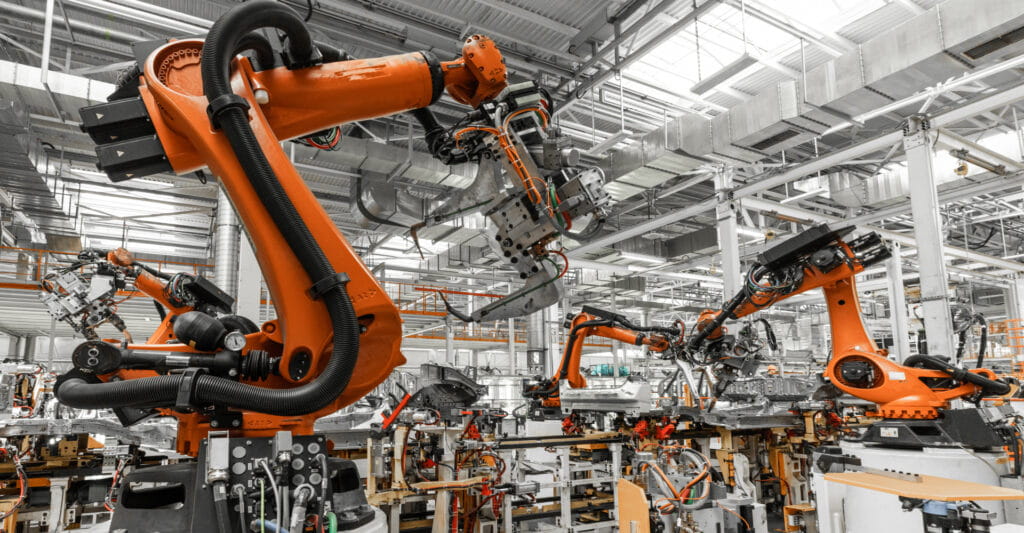
The industrial sector in Nepal is slowly moving towards embracing automation technologies that can improve productivity, reduce operation costs, improve safety, and achieve consistent product quality. Industries are adopting automated systems and smart control technologies to remain competitive in a global market, ranging from traditional manufacturing to today's advanced processors.
The government's ongoing efforts and foreign investment in the industrial sector in Nepal are providing an increasing demand for trained personnel who are capable of installations, programming, operation, troubleshooting, and maintenance of systems. Employers are looking for technicians and engineers who have practical experience in programming the PLC, creating the HMI, designing the SCADA systems, and developing the industrial sensors, motor controls, VFDs, and industrial networking.
Automation is not taking the place of jobs; it is changing the way those jobs are done. It moves up the spectrum to more technical and higher-value jobs, which involve problem-solving, data analysis, and system optimization.
Industrial automation comes with a host of benefits for Nepali industries. The benefits of industrial automation for the Nepali industries are numerous.
Automation provides tangible benefits:
Higher productivity: Machines are running almost 24/7, and productivity is significantly increased.
Reduced labor cost: In repetitive tasks, minimized waste and energy savings are achieved.
Better quality and consistency: Less human error in automated processes, which ensures that products meet international standards, which is essential for exports.
Improved Safety: Robots and sensors perform dangerous work tasks, minimizing workplace accidents.
Real-time monitoring: SCADA & IoT help reduce maintenance costs and improve processes with predictive maintenance.
In the context of Nepal, these benefits are particularly significant, particularly as industries seek to grow and overcome obstacles such as a lack of skilled labor and inadequate infrastructure.
Industries that are applying automation in Nepal.
There are a number of specific areas that are already putting automation measures in place:
- Manufacturing Industries (garments and textiles)
- Cement Plants
- Food and Beverage Processing
- Pharmaceutical Companies
- Hydropower Projects
- Water Treatment Facilities
- Packaging Industries
- Plastic Manufacturing Units
- Growing areas: Garment factories with automated cutting and quality inspection and the growing interest in smart solutions with IoT.
Automated control systems are vital to these industries for efficiency, minimizing downtime, and compliance with regulations.
Industrial automation is a journey fraught with challenges and opportunities in Nepal.
Although progress in making Industry 4.0 a reality is noticeable, Nepal is still challenged to achieve full Industry 4.0 adoption due to a lack of infrastructure, initial investment expenses, and skills. There are still many industries in the early stages of automation.
At the same time, however, there are huge opportunities. The emergence of industrial estates, foreign investment, and a manufacturing growth agenda, supported by government policy, and the acceleration of a post-pandemic shift towards digital tools, make automation a development driver. Experts in up-to-date systems can aid regional industries as well as global ventures.
Industrial automation has facilitated careers in a variety of fields after learning.
Industrial automation is one of the most sought-after technical skills. The professional is employed in Nepal and abroad.
The industrial control systems programming and SCADA engineer position encompasses the monitoring and control system development as well as the instrumentation and sensor and process control management, while the industrial electrician performs the automation systems-based electrical system management, and the automation position is responsible for the design and implementation of automation projects, including the troubleshooting of automation machinery.
As investments in manufacturing and hydropower and processing increase, automation experts can find employment in plants and engineering companies and service companies, as well as their own maintenance or integration companies.
The future trends in Nepal towards Industry 4.0 and beyond
The possible future of automation applications in Nepal: Integration of IoT (Internet of Things) into the automation system, AI-based predictive maintenance, data analytics, smart factories, and collaborative robots (cobots). With the transition in the world towards Industry 4.0 and ultimately Industry 5.0 (human-machine collaboration), the early adopters in Nepal will be ahead of the curve in terms of competition.
These skills will help pave the way for high-growth jobs and contribute to the overall economic modernization of Nepal.
Learn industrial automation training in Nepal from Apex Skills Academy.
Apex Skills Academy & Research Center provides industrial automation training in Nepal focused on the industry. The program is designed for students, diploma holders, engineers, electricians, technicians, and working professionals looking for job-ready skills.
Course Highlights:
- Programming (Siemens, Allen-Bradley, etc.)
- HMI Development
- SCADA Systems
- Industrial Sensors and Actuators
- Motor Control Systems and VFD Programming.
- Industrial Networking Basics is a course that introduces the student to industrial networking basics, including Modbus, Profibus, and Ethernet.
- Describes troubleshooting and maintenance techniques. Identify troubleshooting and maintenance techniques.
- Engaging hands-on projects and simulations.
The training focuses on practical applications in modern premises, linking theory with industry application.
What are the key reasons to get enrolled in Apex Skills Academy for industrial automation training?
- Hands-on training and using real equipment.
- Industry-experienced trainers with knowledge about the current market requirement.
- Choices of learning in both physical and virtual spaces. Learning flexibility in both physical and virtual environments.
- Curriculum that leads to employment, based on the needs of the employer.
- Certification given at the end of the course with successful completion.
- Careers guidance and placement support.
- Have a strong emphasis on new technologies for future preparedness
Frequently Asked Questions (FAQs)
What is industrial automation in simple words?
Industrial automation involves the use of machines, sensors, computers, and control systems to automate the process as much as possible, thus making the production faster, safer, and more accurate.
Is working in the industry a worthwhile career in Nepal or not?
Yes. The demand for PLC, SCADA, and control systems professionals is high with the growing industrial adoption and modernization.
What skills are required in order to learn industrial automation?
Fundamentals of electricity/electronics and training in programming PLCs, HMIs, sensors, motors, and networks.
Where to get training in industrial automation in Nepal?
Apex Skills Academy & Research Center offers hands-on, applied training.
Does automation in industry take away jobs?
No. It transforms and modernizes the job domains, providing greater opportunity for hired, technically skilled persons and minimizing repetitive manual tasks.
Industrial automation skills will play a crucial role in Nepal's future because of the following reasons:
As the industries of Nepal are getting upgraded with modernization, automation specialists will play an important role in making the industries smart, efficient, and competitive. Development in these skills now will provide a more stable career now and in the future, better earning potential, and the ability to contribute to national development.
Conclusion
The automation of industries is becoming inevitable and not an option for Nepal. It unlocks growth and enhances efficiency and quality in important industries and provides opportunities for skilled workers in fulfilling career paths.
Practical and future-oriented training is helping to bridge the skills gap, with the help of institutes such as Apex Skills Academy & Research Center. Be a student, technician, or professional; learning these skills can make a difference in your future career in this exciting and growing field.
Looking to create a career for the long term?
Visit Apex Skills Academy today to register for their industrial automation training program and make your first step towards becoming a highly in-demand automation expert in Nepal and globally.